Stainless Steel Laser Cutting Service
|
 |
|||
 |
 |
 |
 |
|
| 0.5-20mm | N2/O2 | <0.1mm | 304/316/430 | |
|
|
|
|
|
|
Material Properties & Processing Correlation Deep Dive
| Material Characteristics | Impact on Laser Cutting & Countermeasures | ||
| 1. Chromium-Nickel Alloy Forms Dense Oxide Layer |
Benefit: Excellent corrosion
resistance retained at cut edges. Challenge: High viscosity of molten material leads to dross formation. Solution: High-pressure nitrogen assist for bright surface cutting. |
||
| 2. Low Thermal Conductivity (vs. Al, Cu) |
Benefit: Heat concentration improves
cutting efficiency. Challenge: Localized heat input increases risk of thermal deformation. Solution: Optimized cutting path + pulsed perforation to disperse heat. |
||
| 3. Viscosity Variation at High Temperatures |
Challenge: In thick plates, molten
slag is difficult to eject from bottom. Solution: Stepwise power & gas pressure adjustment to ensure full penetration. |
||
Cutting Challenges & Our Process Solutions
|
|
|
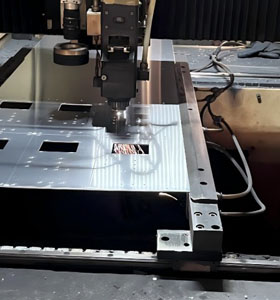
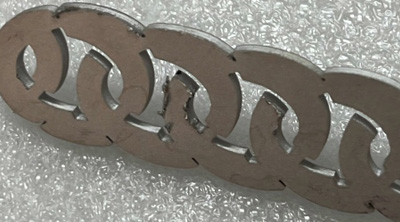
Challenge 1: Dross Our Solutions: Gas Optimization: Precision selection of high-purity nitrogen (no oxidation, minimal dross) or oxygen (high speed, but with an oxide layer) based on requirements. Focus Control: Dynamic adjustment of the focal point to ensure optimal energy distribution across the material thickness. Parameter Database: Utilize pre-validated power-speed-gas pressure parameter sets based on material grade and thickness. |
Challenge 2:
Thermal Distortion Our Solutions: Cutting Path Optimization:Techniques like "lead-in" and spiral perforation to prevent localized heat buildup. Nesting Strategy: Reserve micro-joints during layout, which are cut after cooling to maintain the overall rigidity of the plate. Sequential Cutting: Process internal holes first, followed by external contours, to allow even stress release. |
Recommended Process Window for Stainless Steel Laser
Cutting
(Using 304 as an Example)
| Thickness | Recommended Power | Cutting Gas | Expected Surface Quality |
| <1mm | 1-3KW | Nitrogen | Nearly dross-free, suitable for precision parts |
| 1-3mm | 3-6KW | Nitrogen/Oxygen | Minimal controllable dross, low polishing cost |
| 3-8mm | 6KW+ | Oxygen(Primary) | Priority on efficiency, oxide layer requires post-processing |
| >8mm | 12KW | Oxygen | Ensuring full penetration, bevel quality is critical |
Finished Product Gallery and Application Scenarios
 |
 |
 |
|
|
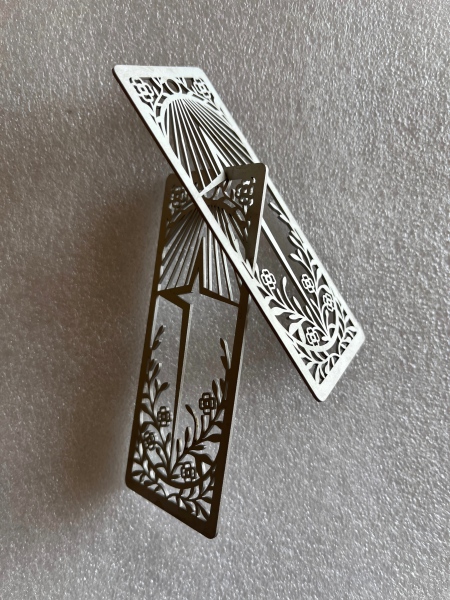
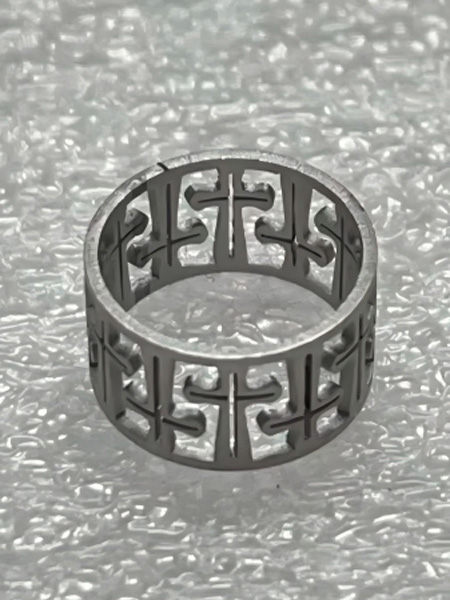
Material: 304 Stainless Steel | Thickness: 1mm | Process: High-Power Precision Laser Cutting, Polishing, and Electroplating | Value: Delivers intricate patterns with no broken points, faithfully reproduces complex graphics, and achieves exquisite aesthetic detailing. |
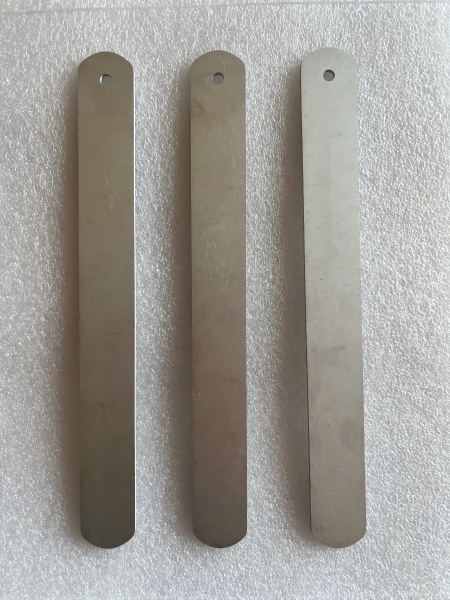
Material: 304 Stainless Steel | Thickness: 2mm | Process: High-Power Precision Laser Cutting, Brushed Finish, and Bending | Value: Product-grade design with smooth cut edges, seamlessly integrating aesthetic form with practical function and safe, user-friendly handling. |
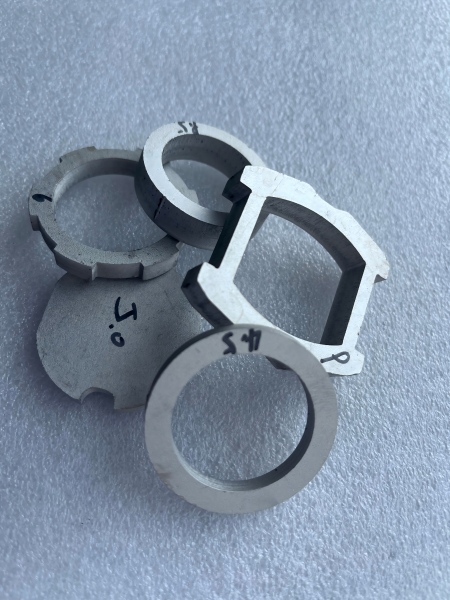
Material: 316 Stainless Steel |Thickness: 9mm |Process: Nitrogen High-Definition Cutting |Value: Burr-free: Smooth cut edges require no secondary processing; dross-free, no heat-affected zone, and deformation-free. |
Material: 304 Stainless Steel | Thickness: 0.5mm | Process: Distortion-Free Tubular Perforation | Value: Product-grade design with smooth cut edges, seamlessly integrating aesthetic form with practical function and safe. |
|
|
|
|
|
| Send Inquiry Now | Send Inquiry Now | Send Inquiry Now | Send Inquiry Now |
Material-Specific FAQ
| Q: What are the process differences between cutting 304 and 316 stainless steel? | |||
| A: Due to its molybdenum content, 316 stainless steel has a more viscous molten material. This requires reducing the cutting speed by approximately 10% or slightly increasing the gas pressure, along with using higher-purity auxiliary gas to ensure cut quality. Our equipment includes a dedicated parameter library for such adjustments. | |||
| Q: I need a mirror-like finish. How do I select the process? | |||
| A: A mirror finish requires using nitrogen or argon as the auxiliary gas for "fusion cutting," combined with higher gas pressure and optimized focal point positioning. This may produce minimal dross, but it can be easily removed with a scouring pad to reveal a bright, silver base material. | |||
| Q: My stainless steel part warped after cutting. What should I do? | |||
| A: Warping is typically caused by thermal stress. Please contact us immediately. We can analyze your part nesting and cutting paths to provide optimization solutions. For already deformed parts, we offer specialized flattening processes. |